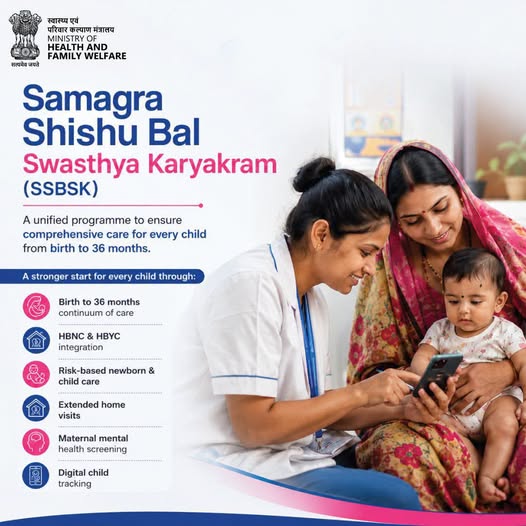


India’s new national initiative, Samagra Shishu Bal Swasthya Karyakram – comprehensive care during the first three years – integrates home-based newborn care and home-based care for young children programmes. It recognises the critical importance of the first 28 days for newborn survival and the first three years for optimal brain development, while strengthening child survival, nutrition, healthy growth and early childhood development.
One of the key features of the programme is the introduction of a risk-stratified approach for newborns and young children, considering conditions such as low birth weight, prematurity, delayed initiation of breastfeeding, discharge from newborn care units, malnutrition, recurrent illness or developmental delays. Under the programme, these children will receive intensified follow-up through additional home visits tailored to their level of risk. This will include up to nine home visits during the first 42 days and up to eight home visits to the age of 36 months.
The revised guidelines (download) demonstrate how risk-stratification and a differentiated care model, as well as nurturing care for ECD, can be effectively integrated into community-based child health programmes, based on well-child guidance). The WHO acted as the Secretariat for this guidance. The guidelines also address emerging challenges associated with the digital era by recognising excessive screen exposure and reduced physical interaction during early childhood as potential risks to brain development, emotional well-being and social skills. It thus promotes age-appropriate play, physical activity and mental stimulation throughout the first three years of life to support children’s cognitive, physical, emotional and social development.
Decision-support systems will provide child-wise digital tracking, referral mechanisms, and these will be integrated with national digital health platforms. The programme also includes tailored strategies to strengthen home-based care in urban areas, particularly for children residing in slums, migrant settlements and other underserved communities.
Officials said the launch of this programme marks a significant milestone in the government’s efforts to strengthen the continuum of maternal, newborn and child healthcare through a nurturing, inclusive and digitally enabled approach.
More information here.