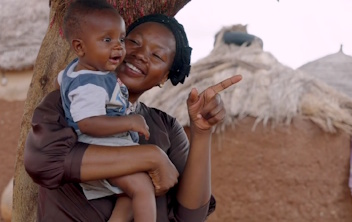
Grabado en Ghana, este vídeo en español incluye 7 situaciones entre cuidadores y niños sin narración. El vídeo forma parte de la serie «Responsive Care and Early Learning» (Cuidado receptivo y aprendizaje temprano) de USAID, producida por Global Health Media Project en colaboración con JSI Research & Training Institute, Inc.Read More →

Это видео, снятое в Гане, содержит 7 сценариев взаимодействия между опекунами и детьми без дикторского комментария. Видео является частью серии «Отзывчивый уход и раннее обучение» USAID, произведенной Global Health Media Project в сотрудничестве с JSI Research & Training Institute, Inc.Read More →

Filmado no Gana, este vídeo em português inclui 7 cenários entre cuidadores e crianças, sem narração. O vídeo faz parte da Série Cuidados Responsivos e Aprendizagem Precoce da USAID, produzida pela Global Health Media Project em colaboração com a JSI Research & Training Institute, Inc.Read More →

Tournée au Ghana, cette vidéo en français comprend 7 scénarios mettant en scène des enfants et leurs parents, sans narration. Cette vidéo fait partie de la série « Responsive Care and Early Learning » (Soins réactifs et apprentissage précoce) de l’USAID, produite par Global Health Media Project en collaboration avec JSI Research & Training Institute, Inc. Read More →

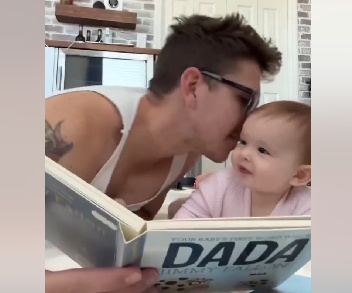
A father is reading to a 6 month old baby. The book consists of repetitve words and animal sounds, and the father adds sound effects and interacts with the baby, while reading. The baby shows interest and engagement by looking at the father and the book and smiling in response to animal sounds.Read More →

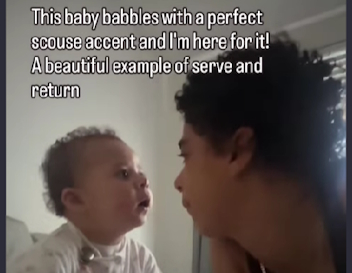
This video illustrates the next stage of parent-child conversations, when a child follows the “conversation rules” but uses “pretend” language. In this video a mother and a toddler are having a dialogue: the mother is using real words and the baby is responding in her “real-like” language.Read More →

In this video a 2-month-old profoundly deaf Charly Keane hears her mother’s voice for the first time with the help of a hearing aid. Notice how Charly watches her mother’s face closely and listens attentively to her wordsRead More →

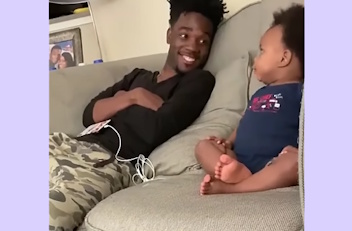
In this video a father is having a “conversation” with his young son about a game they are both watching on TV. Even though the child cannot yet talk, he demonstrates excellent conversational skills (e.g., turn-taking, intonation, gestures). Read More →

A childcare provider is interacting with a child under age 1. Watch how she pays attention to what the child is interested in and talks to the child. Read More →

This video uses a pyramid to explain how children acquire communication skills. The video explains not only the skills that children acquire at each level but also what they need to acquire these skills. Read More →

“The more you talk to your baby, the better they will learn.” This video includes explanations of why talking to children before they can talk is important and examples of caregivers talking to their children (3, 7, 10, 15, and 20 months old).Read More →

In this video a grandmother and young child are playing dress up with clothes they have at home. Notice how the child is initiating (selects the clothing item, decides what to do with it) and the grandmother follows her lead. The grandma collaborates in the play and uses language to explore what the child is thinking/doing and extend the play.Read More →

¿Sabías que el Korekoguá ayuda a que el bebé comprenda que las personas y cosas existen, aunque no las vea? Para jugar al Korekoguá solo tenés que taparte la cara con las manos o con un pañuelo frente a tu bebé. Escondete y luego aparecé con una sonrisa. Al desaparecer decí “Koreko…” y al aparecer, “Guá”. También podés hacer lo mismo cubriendo brevemente la carita del bebé. Otra forma es ocultando su juguete favorito para que lo encuentre.Read More →

¿Sabías que el Kili Kili ayuda al bebé a calmarse, sentirse seguro y a desarrollar sus sentidos? Jugá al Kili Kili con el bebé haciéndole caricias suaves y lentas en el rostro, manos y pies, mirándolo a los ojos, hablándole o diciendo Kili Kili mientras le sonreís y disfrutan juntos. Podés acariciarlo con las manos o con una esponjita. La hora del baño puede ser un buen momento.Read More →