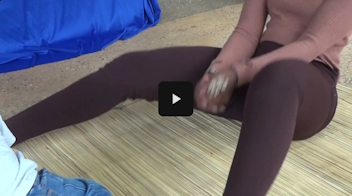
In this video a facilitator interacts with a child under 3 years. She gives the child a three sticks and asks what he would like to do with them. She then copies the child. This goes on and on with the child initiating and the facilitator copying. She is following his lead. Later she demonstrates some actions with her own sticks, then asks the child: ‘And what will you do with your sticks?’Read More →

¿Sabías que el Móvil Bebé sirve para desarrollar las destrezas de las manos y la vista? Para armar el Móvil Bebé es necesario unir trozos de cintas o telas de colores a una goma de cabello y atarlas en un extremo para que no se suelten. De este modo las cintas quedarán unidas y podrán agitarse y tener movimiento al colgar hacia abajo. El adulto puede sujetar el móvil y moverlo lentamente acercándolo al bebé para que pueda seguir los colores y el movimiento con los ojos y alcance a tocarlo. Read More →

Inmediatamente después del nacimiento y en los primeros años de la vida, el cerebro realiza conexiones entre las células cerebrales a muy alta velocidad, y absorbe todo tipo de experiencias: interacciones físicas, las sensaciones del bebé, cómo el bebé procesa lo que está ocurriendo, lo que oye, lo que ve, el contacto físico. Read More →

Este vídeo explica e ilustra cinco etapas de interações de “ação e reação” que são fundamentais para a prestação de cuidados responsivos e necessárias para o desenvolvimento do cérebro. Os cinco passos são: 1) compartilhe o foco; 2) apoie e incentive; 3) nomeie; 4) revezem-se; e 5) pratiquem finais e começos.Read More →

In this video a facilitator plays with a child under age 3. She lays out pieces of different colored cloths between herself and the child, and invites the child to pick one. The facilitator then proceeds to pick the same color. After a while the child picks out the same cloth color herself. Facilitator talks naturally with the child instead of teaching colors in didactic manner.Read More →

This video explains how “serve-and-return” interactions between a child and an adult work to reinforce the development of connections in the child’s brain. It also touches on how lack of adult feedback and passive activities such as screen time can negatively affect child development.Read More →

This video was created by Moana Research in New Zealand and adapted with permission by the Center on the Developing Child at Harvard University and in collaboration with Brainwave Trust Aotearoa. It explains and illustrates five steps of “serve and return” interactions that are core to responsive caregiving and brain building. Read More →

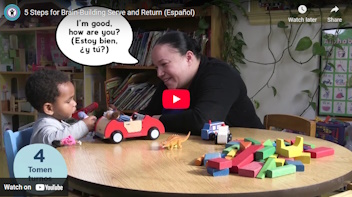
Este vídeo explica e ilustra los cinco pasos de las interacciones de «servir y volver» que son fundamentales para el atención receptiva y necesarias para la construcción del cerebro. Los cinco pasos son: 1) comparte su interés; 2) apoya y anima; 3) nómbralo; 4) tomen turnos; y 5) practiquen los finales y los incios.Read More →

The Beginning of Life (O Começo da Vida) emotionally brings to life the science behind the importance of loving relationships in a child’s early years. Interviews with experts are interspersed with footage of parents and children from nine countries across four continents. Read More →

Part of UNICEF Mini parenting Master class series, Prof. Jack Shonkoff explains the importance of play for brain development. He explains why and how to practice “serve and return” interactions and the value of games such as peek-a-boo for children’s mastery of new skills. Read More →