Grabado en Ghana, este vídeo en español incluye 7 situaciones entre cuidadores y niños sin narración. El vídeo forma parte de la serie «Responsive Care and Early Learning» (Cuidado receptivo y aprendizaje temprano) de USAID, producida por Global Health Media Project en colaboración con JSI Research & Training Institute, Inc.Read More →
Это видео, снятое в Гане, содержит 7 сценариев взаимодействия между опекунами и детьми без дикторского комментария. Видео является частью серии «Отзывчивый уход и раннее обучение» USAID, произведенной Global Health Media Project в сотрудничестве с JSI Research & Training Institute, Inc.Read More →
Filmado no Gana, este vídeo em português inclui 7 cenários entre cuidadores e crianças, sem narração. O vídeo faz parte da Série Cuidados Responsivos e Aprendizagem Precoce da USAID, produzida pela Global Health Media Project em colaboração com a JSI Research & Training Institute, Inc.Read More →
Tournée au Ghana, cette vidéo en français comprend 7 scénarios mettant en scène des enfants et leurs parents, sans narration. Cette vidéo fait partie de la série « Responsive Care and Early Learning » (Soins réactifs et apprentissage précoce) de l’USAID, produite par Global Health Media Project en collaboration avec JSI Research & Training Institute, Inc. Read More →

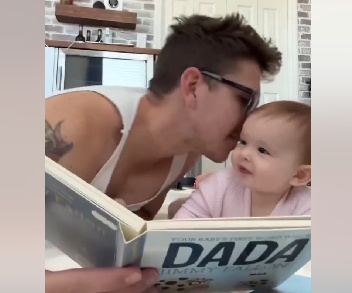
A father is reading to a 6 month old baby. The book consists of repetitve words and animal sounds, and the father adds sound effects and interacts with the baby, while reading. The baby shows interest and engagement by looking at the father and the book and smiling in response to animal sounds.Read More →

A childcare provider is interacting with a child under age 1. Watch how she pays attention to what the child is interested in and talks to the child. Read More →

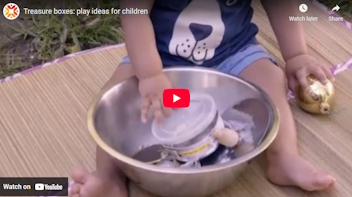
This video describes the idea of assembling treasure boxes – collections of different objects from home or nature that may be interesting for children to explore. They can be themed (e.g., beach, insects, animals, colours, shapes, different textures) or just a collection of different items. Caregivers can ask their children open-ended questions to encourage exploration of the materials in the treasure box in an imaginative and playful way. For example, I wonder what this can be? Read More →

This video uses a pyramid to explain how children acquire communication skills. The video explains not only the skills that children acquire at each level but also what they need to acquire these skills. Read More →

This video describes the importance of play for child’s development and future. Different types of play are described including active play, exploratory play and representational (imaginative and pretend) play. Read More →

“The more you talk to your baby, the better they will learn.” This video includes explanations of why talking to children before they can talk is important and examples of caregivers talking to their children (3, 7, 10, 15, and 20 months old).Read More →

Did you know that sorting shapes promotes the ability to analyze and classify objects? To make shapes cut out geometric shapes, such as triangles, squares and circles of different sizes and colors, from cardboard, construction paper or foam… Read More →

Did you know that sorting shapes promotes the ability to analyze and classify objects? To make shapes cut out geometric shapes, such as triangles, squares and circles of different sizes and colors, from cardboard, construction paper or foam… Read More →

Did you know that rattles or shakers helps stimulate baby’s ability to see, hear and grasp objects? To play this game all you need is a transparent plastic bottle, in which you can put small items such as colored buttons, pebbles, etc.Read More →

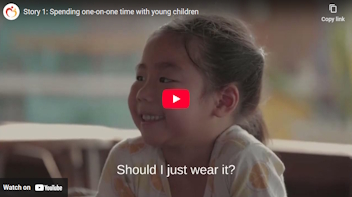
In this video a grandmother and young child are playing dress up with clothes they have at home. Notice how the child is initiating (selects the clothing item, decides what to do with it) and the grandmother follows her lead. The grandma collaborates in the play and uses language to explore what the child is thinking/doing and extend the play.Read More →

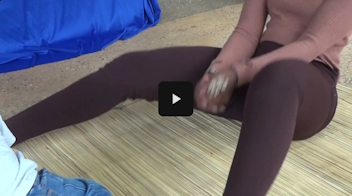
In this video a facilitator interacts with a child under 3 years. She gives the child a three sticks and asks what he would like to do with them. She then copies the child. This goes on and on with the child initiating and the facilitator copying. She is following his lead. Later she demonstrates some actions with her own sticks, then asks the child: ‘And what will you do with your sticks?’Read More →