
These 2025 “Country Profiles for Early Childhood Development” are developed by UNICEF in collaboration with Countdown to 2030 Women’s, Children’s and Adolescent’s Health. The profiles are an attempt to compile, in one place, the available data for country and cross-country monitoring and to provide a baseline against which progress can be monitored.Read More →
These 2025 “Country Profiles for Early Childhood Development” are developed by UNICEF in collaboration with Countdown to 2030 Women’s, Children’s and Adolescent’s Health. The profiles are an attempt to compile, in one place, the available data for country and cross-country monitoring and to provide a baseline against which progress can be monitored.Read More →
These 2025 “Country Profiles for Early Childhood Development” are developed by UNICEF in collaboration with Countdown to 2030 Women’s, Children’s and Adolescent’s Health. The profiles are an attempt to compile, in one place, the available data for country and cross-country monitoring and to provide a baseline against which progress can be monitored.Read More →
These 2025 “Country Profiles for Early Childhood Development” are developed by UNICEF in collaboration with Countdown to 2030 Women’s, Children’s and Adolescent’s Health. The profiles are an attempt to compile, in one place, the available data for country and cross-country monitoring and to provide a baseline against which progress can be monitored.Read More →
These 2025 “Country Profiles for Early Childhood Development” are developed by UNICEF in collaboration with Countdown to 2030 Women’s, Children’s and Adolescent’s Health. The profiles are an attempt to compile, in one place, the available data for country and cross-country monitoring and to provide a baseline against which progress can be monitored.Read More →
These 2025 “Country Profiles for Early Childhood Development” are developed by UNICEF in collaboration with Countdown to 2030 Women’s, Children’s and Adolescent’s Health. The profiles are an attempt to compile, in one place, the available data for country and cross-country monitoring and to provide a baseline against which progress can be monitored.Read More →
These 2025 “Country Profiles for Early Childhood Development” are developed by UNICEF in collaboration with Countdown to 2030 Women’s, Children’s and Adolescent’s Health. The profiles are an attempt to compile, in one place, the available data for country and cross-country monitoring and to provide a baseline against which progress can be monitored.Read More →

These 2025 “Country Profiles for Early Childhood Development” are developed by UNICEF in collaboration with Countdown to 2030 Women’s, Children’s and Adolescent’s Health. The profiles are an attempt to compile, in one place, the available data for country and cross-country monitoring and to provide a baseline against which progress can be monitored.Read More →

These 2025 “Country Profiles for Early Childhood Development” are developed by UNICEF in collaboration with Countdown to 2030 Women’s, Children’s and Adolescent’s Health. The profiles are an attempt to compile, in one place, the available data for country and cross-country monitoring and to provide a baseline against which progress can be monitored.Read More →

These 2025 “Country Profiles for Early Childhood Development” are developed by UNICEF in collaboration with Countdown to 2030 Women’s, Children’s and Adolescent’s Health. The profiles are an attempt to compile, in one place, the available data for country and cross-country monitoring and to provide a baseline against which progress can be monitored.Read More →

The compendium supports efforts to end mistreatment and achieve respectful maternal and newborn care, marking a decade since the WHO’s 2014 statement on the prevention of disrespect and abuse during facility-based childbirth. Despite substantial progress in understanding and measuring respectful care large-scale implementation remains limited. Emerging research has highlighted small-scale interventions, but there is still much to learn about the most effective approaches. Read More →

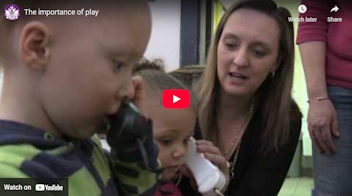
This video describes the importance of play for child’s development and future. Different types of play are described including active play, exploratory play and representational (imaginative and pretend) play. Read More →

This video clip from The Beginning of Life documentary highlights the incredible amount and speed of connections made in the brain in the first years of life. It cites that 700 to 1000 neuronal connections are made every second. However, more recent estimates indicate the number is much higher: “more than 1 million new neural connections per second.”Read More →

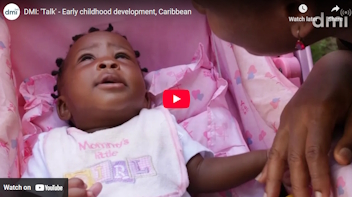
“The more you talk to your baby, the better they will learn.” This video includes explanations of why talking to children before they can talk is important and examples of caregivers talking to their children (3, 7, 10, 15, and 20 months old).Read More →

Cette vidéo décrit les différents types de stress – positif, tolérable, toxique. Avec le soutien adéquat des personnes qui s’occupent d’eux, les enfants peuvent faire face à un stress positif ou tolérable sans que leur santé et leur développement n’en pâtissent.Read More →

Did you know that sorting shapes promotes the ability to analyze and classify objects? To make shapes cut out geometric shapes, such as triangles, squares and circles of different sizes and colors, from cardboard, construction paper or foam… Read More →

Did you know that sorting shapes promotes the ability to analyze and classify objects? To make shapes cut out geometric shapes, such as triangles, squares and circles of different sizes and colors, from cardboard, construction paper or foam… Read More →